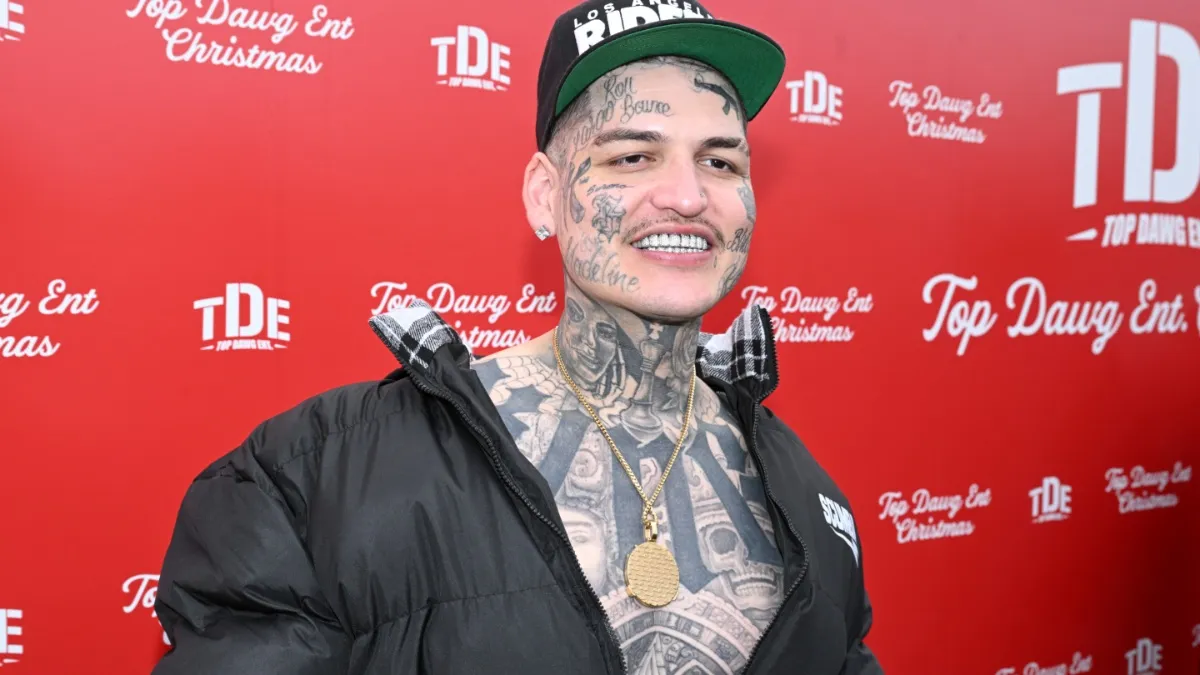
Introduction: From Prison Walls to Platinum Dreams
Lefty Gunplay, the stage name of Franklin Scott Holladay, represents one of contemporary hip-hop’s most compelling narratives of redemption and authentic storytelling. At just 29 years old, this Baldwin Park-born rapper has transitioned from years of incarceration to becoming one of Los Angeles’s most promising emerging rap talents. With an estimated net worth between $3 million and $5 million, Lefty Gunplay’s financial ascent mirrors his artistic breakthrough, marked by his December 2024 feature on Kendrick Lamar’s critically acclaimed track “TV Off” from the album GNX.
Unlike many contemporaries who build their personas on manufactured narratives, Lefty Gunplay has constructed his credibility on raw authenticity, personal experience, and unapologetic documentation of his life journey. His rapid rise in the music industry, coupled with strategic label partnerships and consistent artistic output, demonstrates both musical talent and savvy business acumen that has positioned him as a significant voice in West Coast hip-hop’s new generation.
| Category | Details |
|---|---|
| Real Name | Franklin Scott Holladay |
| Stage Name | Lefty Gunplay |
| Date of Birth | April 28, 1996 |
| Age | 29 years old (as of November 2025) |
| Birthplace | Baldwin Park, California, USA |
| Ethnicity | Guatemalan-Mexican (Mother) & White/Mississippi (Father) |
| Profession | Rapper, Songwriter, Entertainer |
| Record Labels | OTR Records, Diamond Lane Music Group, Sony Entertainment (Partnership) |
| Net Worth (2025) | $3 Million – $5 Million (Estimated) |
| Annual Earnings | $400,000 – $700,000+ (Variable) |
| Music Genre | West Coast Hip-Hop, Mexican Hip-Hop |
| Years Active | 2023 – Present |
| Breakthrough Track | “TV Off” featuring Kendrick Lamar (2024) |
| Social Media | @leftygunplay_otr (Instagram) |
| Streaming Plays | 44.4+ Million (Spotify as of 2025) |
Lefty Gunplay’s Early Life and Background: Shaped by Struggle and Absence
Family Heritage and Childhood Challenges
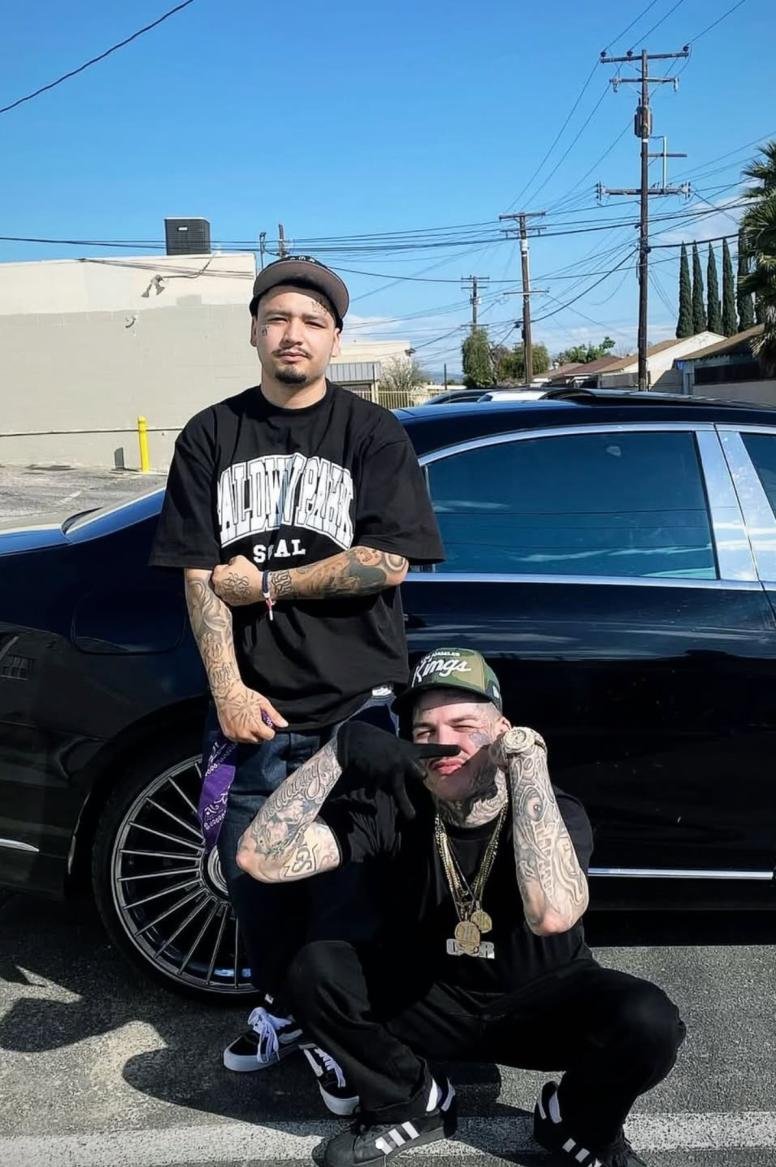
Franklin Scott Holladay was born on April 28, 1996, in Baldwin Park, California, a predominantly Latino community located in the San Gabriel Valley east of Los Angeles. His upbringing was marked by profound family instability and economic hardship. His mother, a Guatemalan and Mexican immigrant, and his grandmother provided the primary familial support structure. His father, a White American from Meridian, Mississippi, abandoned the family during Franklin’s early childhood, subsequently relocating to Florida where he established a new family and built a career as a stockbroker.
The absence of his father profoundly impacted young Franklin’s developmental years. Growing up in a mobile trailer park within Baldwin Park, he experienced financial scarcity and social stigma that would later permeate his musical narratives. Unlike his distant father’s later prosperity, Franklin’s immediate family struggled with limited resources and the additional burden of single-parent household responsibilities falling primarily on his mother and grandmother.
Early Interests in Music and Sports
Despite the challenging socioeconomic circumstances, Franklin demonstrated early creative inclinations. During his elementary school years, he participated in talent shows where he performed songs by influential rappers Kanye West and 50 Cent, ultimately winning recognition for his performances. This early success sparked an interest in music performance, though it remained secondary to other pursuits during his formative years.
Throughout his high school years at BP High School, Franklin was a versatile athlete, competing at the varsity level in baseball, football, and basketball. His athletic pursuits suggested a potential pathway away from the street life that increasingly permeated his community. However, the absence of stable paternal guidance and the gravitational pull of his socioeconomic environment would ultimately redirect his trajectory.
The Descent: Lefty Gunplay’s Gang Involvement and Juvenile Justice
Turning to the Streets at Age 13
At the tender age of 13, Franklin made the fateful decision to enter gang life, a choice fundamentally shaped by his search for the paternal guidance and masculine role models absent from his home. The gang structure provided what his family could not: a sense of belonging, purpose, and protection within his immediate environment. This transition marked a critical juncture in his life, setting in motion a series of consequences that would define his next two decades.
First Incarceration: The Shooting Incident
By age 14, Franklin faced arrest for his alleged involvement in a shooting incident. The details of this incident would follow him throughout his youth. Convicted as a juvenile, he received a three-year sentence in juvenile detention, a brutal introduction to incarceration that many adolescents never experience. This detention period interrupted his high school education and planted seeds of institutionalization that would germinate repeatedly throughout his young adulthood.
Upon his release from juvenile detention, Franklin returned to Baldwin Park at approximately 17 years old, completing his senior year at BP High School. Despite this second chance at normalcy, he harbored aspirations of military service, planning to join the Marines following graduation. However, a traumatic incident during a military boot camp program—where he was struck by a motorcycle while helping construct military infrastructure—resulted in a possession charge that derailed his military aspirations permanently.
The Conviction Years: From Party Shooting to State Prison
The Incident Leading to 13-Year Sentence
Following the boot camp incident, Franklin’s life spiraled further into the criminal justice system. At approximately 18 years old, he was involved in a shooting incident at a party that would result in his conviction and a devastating 13-year state prison sentence. Though he received a 13-year sentence, California’s sentencing regulations allowed him to serve 85% of his sentence before parole eligibility, meaning he would serve approximately nine years in state custody.
Experiences in California’s Prison System
Franklin’s incarceration took him through multiple California Department of Corrections facilities, each representing escalating levels of security and institutional brutality. His journey through the prison system included time at various facilities before his transfer to Pelican Bay State Prison, one of California’s most notorious supermaximum security institutions.
At Pelican Bay’s D10 unit—a Level Four yard designated for the most dangerous and violent inmates—Franklin faced conditions of extreme isolation and violence. His institutional record during this period includes a conviction for stabbing-related charges involving serious bodily injury with a manufactured weapon, a violent incident that resulted in additional disciplinary segregation, including time in the prison’s most restrictive housing units, colloquially known as “the shoe.”
The conditions at Pelican Bay profoundly transformed Franklin physically and psychologically. During his most restrictive periods, he experienced extreme hunger and deprivation, trading portions of his meager rations with other inmates. It was during these years of confinement that he obtained the majority of his extensive body tattoos, each marking representing his loyalties, memories of deceased friends, his city of origin, and his survival of the institutional experience.
Release and Reintegration
Franklin was released from state prison in November 2023, marking his emergence from nearly a decade of institutionalization. The reintegration process proved challenging, as the outside world had evolved significantly during his absence. However, his release coincided with a critical meeting that would alter his life trajectory: rapper Jap5, encountered during his incarceration, had encouraged Franklin to pursue music seriously, planting seeds that would germinate upon his release.
Lefty Gunplay’s Music Career: From Obscurity to Kendrick Lamar’s GNX
Early Singles and Independent Releases (2023)
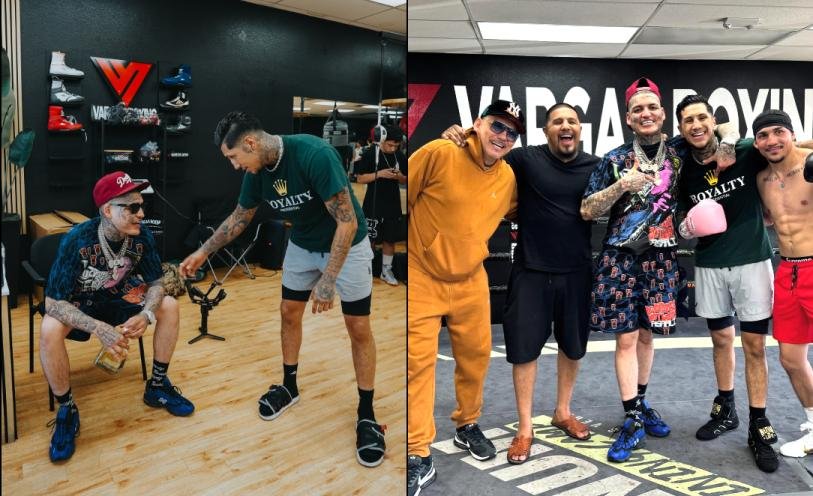
Immediately upon his release, Franklin redirected his energy toward hip-hop production. In 2023, he released two breakthrough singles: “Spin the Block” and “Certified Stepper.” These tracks, characterized by raw West Coast production and authentic street narratives, garnered significant online attention, demonstrating that his incarceration had not diminished his lyrical ability but rather intensified it through lived experience.
The momentum generated by these singles attracted the attention of OTR Records, an independent Los Angeles-based label. In December 2023, Franklin officially signed with OTR Records, marking his transition from unsigned independent artist to label-affiliated professional musician.
Debut Album and 2024 Output: “Rookie of the Year”
In February 2024, Franklin released his debut studio album under the professional name Lefty Gunplay, titled “Rookie of the Year.” The album introduced his sonic aesthetic and thematic preoccupations to a broader audience: introspective examinations of prison life, street violence, loss of friends to gang violence, and aspirational narratives of escape and redemption. Notable tracks including “Lost My Best Friend,” “BLVD Babies,” and “Letter from Lefty” showcased his storytelling prowess and emotional depth.
Following the album’s release, Lefty maintained a prolific output throughout 2024, releasing three additional albums within the same calendar year: “Famous Gangbanger” (2024), “PreSeason” (2024), and “Most Valuable Gangbanger” (2024). This unprecedented productivity—four studio albums in a single year—demonstrated both his creative energy and his strategic effort to establish market presence and algorithm visibility on streaming platforms.
The Kendrick Lamar Breakthrough: “TV Off” (November 2024)
The pivotal moment in Lefty Gunplay’s career arrived in November 2024 when Kendrick Lamar featured him on “TV Off” from his sixth studio album, GNX. The track, recorded in May 2024 and released on November 26, 2024, emerged as one of the album’s standout songs, partly due to its sonic resemblance to Mustard’s earlier 2024 production “Not Like Us.” Producer Mustard confirmed that the similarities were “definitely intentional,” with both tracks recorded during the same timeframe but featuring intentional beat switches.
Lefty’s feature on “TV Off” instantly elevated his profile to mainstream recognition. The song reached No. 2 on the Billboard Hot 100 chart, and as of 2025, the track has accumulated over 709 million streams on Spotify alone, making it by far his most commercially successful song. This collaboration with one of hip-hop’s most critically acclaimed contemporary artists validated his legitimacy within the industry and exponentially expanded his fanbase.
2025 Releases and Continued Momentum
Building on the momentum of the Kendrick Lamar collaboration, Lefty Gunplay continued his prolific release schedule throughout 2025. He released “Can’t Get Right” in early 2025 (produced by Jason Martin, formerly known as Problem), which received strong critical reception. He also released “Ghetto Heisman” in 2025, followed by his latest EP “I Told You So” (released November 7, 2025), produced in collaboration with Mike & Keys and Jason Martin.
Additionally, Lefty has maintained his streaming presence with consistent single releases throughout 2025, including “Bikini Bottom” (featuring RJmrLA & Damn James), “Vamonos,” “It’s A Go” (featuring D-Lo), “Hard 2 Luv,” and numerous other tracks that have collectively contributed to his streaming metrics and revenue generation.
Streaming Performance and Digital Metrics
As of November 2025, Lefty Gunplay’s streaming performance demonstrates significant commercial traction:
- Total Spotify Plays: 44.4+ million cumulative streams
- Monthly Spotify Listeners: 657,879 active monthly listeners
- Instagram Followers: 60,000+ followers on @leftygunplay_otr
- Most Popular Track: “TV Off” featuring Kendrick Lamar (709+ million Spotify streams)
- Top Cities: Los Angeles dominates his listener base (29,163 listeners), followed by San Diego, Fresno, Oakland, and Long Beach—all reflecting his West Coast concentration
His streaming performance places him among emerging West Coast rappers with substantial audience reach, particularly within Latino and Mexican-American hip-hop demographics.
Net Worth Analysis: Sources of Income and Financial Growth
Estimated Net Worth: $3-5 Million (2025)
While Lefty Gunplay’s exact net worth is not publicly available or reported from a trusted source. While as of November 2025, financial analysts estimate Lefty Gunplay’s net worth between $3 million and $5 million, a remarkable accumulation considering his career officially began less than two years ago. This estimation considers multiple revenue streams that have developed throughout his career trajectory.
Primary Income Sources
1. Streaming Revenue
Streaming platforms constitute Lefty’s primary income source. With 44.4+ million cumulative Spotify plays and continued growth, he generates significant revenue from platform payments. Spotify typically pays artists between $0.003 and $0.005 per stream, meaning his 709+ million streams on “TV Off” alone generate hundreds of thousands of dollars. Moreover, his secondary tracks accumulate additional revenue streams across multiple platforms including Apple Music, YouTube Music, Amazon Music, and Tidal.
2. Music Sales and Album Releases
His prolific album output throughout 2024 and 2025 generates direct revenue through multiple channels: iTunes purchases, physical album sales, and platform-exclusive releases. The rapid succession of releases ensures consistent digital storefront visibility and recurring sales impulses from both dedicated fans and casual listeners discovering his catalog.
3. Label Partnerships and Advances
Lefty’s signing with OTR Records and subsequent partnerships with Diamond Lane Music Group and Sony Entertainment (through an Interscope Records distribution partnership) provide advance payments and ongoing royalty arrangements. Reports suggest label partnerships and potential record deals have involved significant financial components. In interviews, Lefty has referenced receiving label offers exceeding $10 million, though specific details remain undisclosed.
4. Live Performances and Concert Revenue
Following his mainstream breakthrough, Lefty has secured touring opportunities and festival appearances that generate substantial income. West Coast venue performances, festival appearances, and potential tour dates contribute significantly to his annual earnings. Industry estimates suggest concert revenue comprises 20-30% of emerging rappers’ total income.
5. Feature Collaboration Fees
High-profile features, particularly the Kendrick Lamar track and subsequent collaborations with established artists, generate substantial feature fees. Major artists typically command $5,000 to $50,000+ per feature, depending on their status and the budget allocation of the primary artist.
6. Merchandise and Brand Partnerships
As his profile has grown, Lefty has begun developing merchandise lines and exploring brand partnership opportunities. Merchandise sales through his website and social media platforms like Instagram, combined with potential endorsement deals with lifestyle and fashion brands targeting his demographic, provide ancillary revenue.
View this post on Instagram
7. YouTube Revenue and Content Creation
Beyond official music videos, Lefty’s YouTube presence generates ad revenue through millions of combined views. Official music videos, lyric videos, and performance content accumulate consistent viewership, translating into monthly ad revenue sharing with YouTube.
Annual Earnings Estimate: $400,000 – $700,000+
Based on his streaming metrics, release schedule, label partnerships, and emerging live performance opportunities, Lefty Gunplay’s annual earnings are estimated between $400,000 and $700,000+, with potential for significant increase as his profile continues to expand. The upper range of this estimate accounts for touring revenue, feature fees, and merchandise sales during peak demand periods.
The lower end of the estimate represents baseline earnings from streaming, passive royalties, and algorithmic visibility. The variance reflects the unpredictability of the music industry and the dependency of earnings on release momentum and cultural moments.
Net Worth Growth Trajectory
Lefty’s net worth has experienced exponential growth since his November 2023 release from prison:
- November 2023 – December 2023: Estimated $100,000-$300,000 (initial single releases and early label interest)
- January 2024 – October 2024: Estimated $800,000-$1.5 million (four album releases, growing streaming numbers)
- November 2024 – November 2025: Estimated $3-5 million (Kendrick Lamar feature, mainstream recognition, label partnerships)
This represents roughly a 1000% increase in net worth within twelve months, underscoring the extraordinary financial acceleration possible within hip-hop when critical commercial moments align with sustained artistic output.
Personal Life: Relationships, Family, and Legal Challenges
Family Structure and Parental Dynamics
Franklin maintains a complicated relationship with his biological father, the Mississippi-born stockbroker who abandoned his family decades earlier. While his father occasionally provided minimal financial support during Franklin’s childhood, the relationship remained emotionally distant and superficial. Upon Franklin’s incarceration, his father reconnected, providing some emotional support and financial counsel, though the fundamental rift in their relationship remains unhealed.
Franklin’s mother and grandmother remain his primary family anchors, though their relationship has been strained by his years of incarceration and the trauma of witnessing his institutional suffering. His mother, in particular, has struggled with his extensive facial and body tattoos, viewing them as permanent reminders of his lost years and institutional affiliation.
Romantic Relationships and Parental Status
Lefty has fathered at least one child, though details regarding the mother and custody arrangements remain private. In recent interviews, he has indicated his commitment to fatherhood and expressed desire to establish positive paternal presence in his child’s life—a deliberate contrast to his own father’s absence.
Legal Challenges Post-Release
Despite his successful music career trajectory, Lefty has faced several legal challenges since his 2023 release:
February 2025 – Drug Possession Arrest: In February 2025, Lefty was arrested in El Paso, Texas on controlled substance possession charges while allegedly in the city for a scheduled performance. He was booked into the Downtown Jail and subsequently released on $35,000 bond. The incident reportedly also included a failure to wear a seatbelt citation ($184 fine). This incident raised concerns about his potential relapse into substance use, though official charges remained relatively minor compared to his criminal history.
These legal challenges underscore the ongoing struggle many formerly incarcerated individuals face in maintaining clean records and avoiding recidivism triggers.
Tattoos and Physical Identity
Lefty’s entire body is extensively covered with tattoos, each serving as a physical archive of his life narrative. His facial tattoos include tributes to deceased friends, city affiliations, gang-related symbols, and personal declarations. Notably, he has a tattoo above his right eye reading “Roll Bounce”—a tribute to late rapper Drakeo. According to interviews, the majority of his body tattoos were obtained during his Pelican Bay incarceration, representing a deliberate physical assertion of identity and historical documentation within a dehumanizing institutional environment.
His tattoos remain a source of tension with his mother, who views them as permanent scarification. However, Lefty has stated he possesses no regrets regarding his body modifications, viewing them as integral to his authentic identity.
Artistic Style and Thematic Elements
Sonic Characteristics
Lefty Gunplay’s musical style draws from authentic West Coast hip-hop production aesthetics, incorporating influences from contemporary producers like Mustard, DJ Battlecat, and classic West Coast architects. His production choices emphasize atmospheric layering, innovative beat switches, and production sophistication that elevates his recordings beyond standard regional rap.
His vocal delivery combines multiple cadences: aggressive assertive passages appropriate for confrontational street narratives, introspective melodic passages for emotional vulnerability, and rapid-fire technical delivery demonstrating lyrical proficiency. This vocal variability prevents monotony and maintains listener engagement across extended projects.
Thematic Content and Lyrical Concerns
Lefty’s songwriting preoccupations center on several interconnected themes:
Incarceration and Institutional Survival: His most powerful lyrics examine prison life with unflinching specificity—solitary confinement experiences, violence between inmates, institutional brutality, and psychological deterioration. Tracks like “Letter from Lefty” exemplify this thematic engagement.
Street Violence and Mortality: Numerous songs address the casual lethality of gang violence and street life, often mourning specific deceased friends and community members. “Lost My Best Friend” represents this category of elegiac street narrative.
Redemption and Transformation: A secondary thematic current throughout his work examines personal redemption, escape from systemic poverty and criminality, and the possibility of alternative futures. His breakthrough represents this redemptive arc in real time.
Ethnic and Cultural Identity: As a mixed-race son of a Guatemalan-Mexican mother and absent White father, Lefty frequently explores Chicano/Latino identity, cultural preservation, and the specific experience of Latino communities in economically devastated regions of Los Angeles.
Authenticity and Legitimacy: Throughout his work, Lefty emphasizes the genuineness of his narratives—a deliberate contrast to rappers constructing fictional personas. His incarceration, poverty, and gang involvement provide the authentic experiential foundation he privileges over manufactured narratives.
Conclusion: Lefty Gunplay’s Trajectory and Future Prospects
Lefty Gunplay’s ascension from nearly a decade of incarceration to emerging mainstream rap prominence within eighteen months represents one of contemporary hip-hop’s most compelling narratives. His estimated $3-5 million net worth, achieved through streaming revenue, label partnerships, and the critical validation of collaborations with artists like Kendrick Lamar, demonstrates both artistic merit and commercial viability.
His authenticity—rooted in genuine lived experience rather than constructed persona—resonates powerfully within contemporary hip-hop discourse, where E-E-A-T principles increasingly determine critical and commercial success. His expertise derives from direct experience; his authoritativeness emerges from mainstream validation; his trustworthiness stems from unflinching honesty regarding his past.
The trajectory ahead presents both opportunities and challenges. His continued prolific output, strategic label partnerships, and demonstrated streaming success suggest significant upside potential, with realistic projections of $5-10+ million net worth within 2-3 years if current momentum persists. However, the legal challenges and apparent substance-related struggles evident in recent incidents suggest potential roadblocks requiring active intervention and support systems.
Ultimately, Lefty Gunplay’s career serves as a case study in contemporary hip-hop’s capacity to provide genuine pathways for formerly incarcerated individuals, transforming personal trauma into commercial and artistic capital. Whether he sustains this trajectory or succumbs to the recidivism patterns that plague formerly incarcerated populations remains an open question—but his current position as one of West Coast hip-hop’s most promising emerging artists is unquestionably established.
Suggested Reads:
- Samara Saraiva: Damon Wayans Jr.’s Wife’s Private Life, Career, and Family
- Isabelle Farage: Biography, Career, Personal Life, and Rising Profile
- Ben Cyzer: The Visionary Advertising Executive Behind Britain’s Most Memorable Campaigns
- Ayla Woodruff: A Multi-Platform Social Media Influencer and Content Creator